

Self-initiated · Consumer Mobile Product
Where past trips become the starting point for what comes next
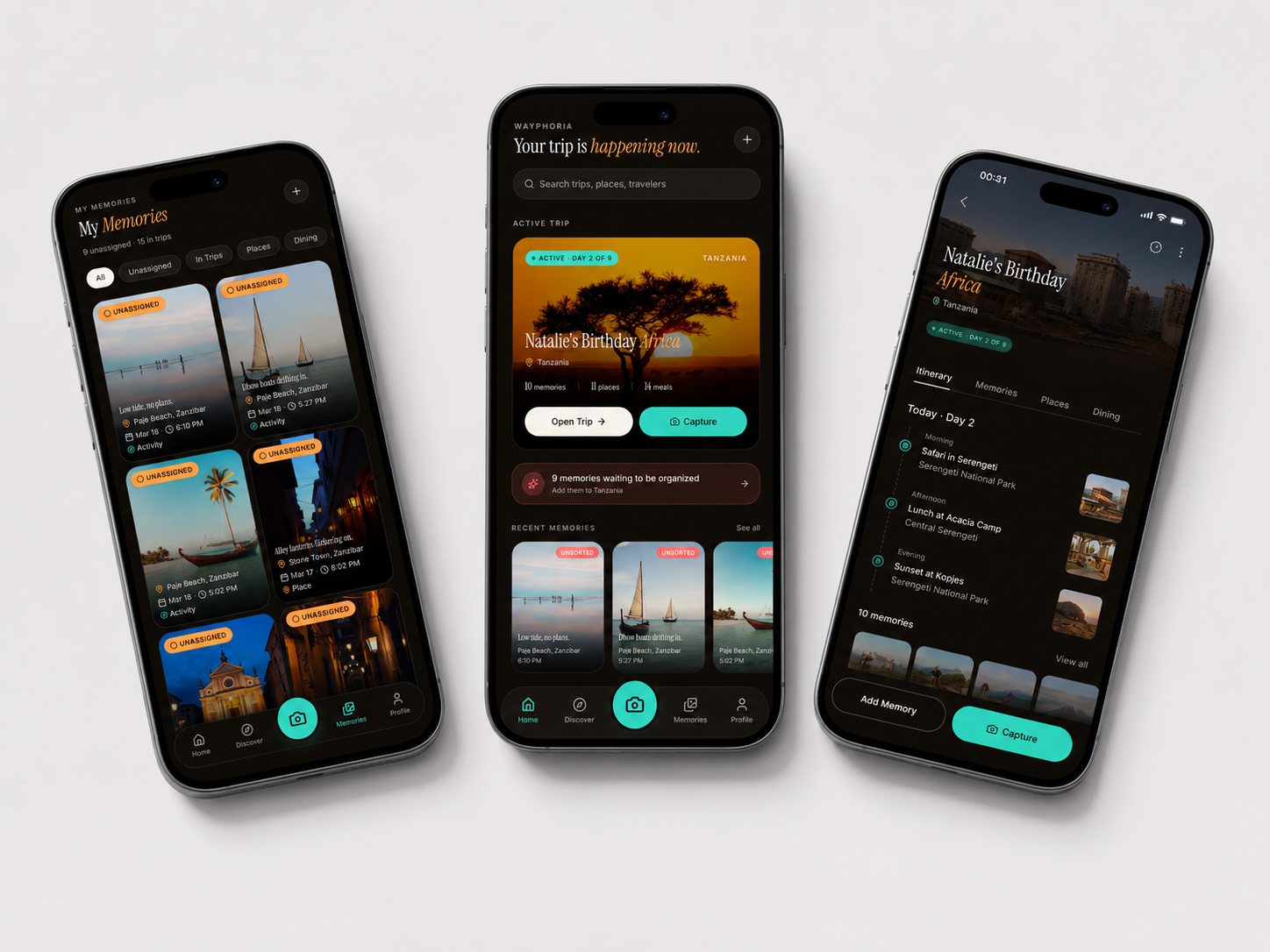
Wayphoria is a travel platform built around real trips, connecting the places, decisions, experiences, and memories of one traveler with the inspiration and planning needs of another.
- Product Framing
- Core Loop
- Mobile UX
- My role
- Self-initiated product framing, core-loop definition, IA, and mobile product design.
- Scope
- Self-initiated concept / prototype · consumer mobile product
- Context
- Featured · Self-initiated · Consumer Mobile Product
01 — THE FRAGMENTED JOURNEY
Travel inspiration is everywhere. The journey between tools is fragmented.
A traveler may move between social media for inspiration, blogs and Reddit for recommendations, Google for research, Maps for saved places, notes for ideas, booking platforms for reservations, itinerary tools for planning, and a camera roll once the trip begins.
The travel lifecycle
- Inspiration
- Research
- Save
- Plan
- Book
- Experience
- Capture
- Remember
Where the fragmentation happens
Inspiration
Lives in one place — feeds, reels, and recommendations.
Planning
Happens in another — notes, docs, and itinerary tools.
Bookings
Sit somewhere else entirely — confirmation emails and apps.
Memories
End up somewhere else again — a camera roll with no context.
The problem was not a lack of travel content. It was the lack of continuity between the stages of travel.
02 — THE INSIGHT
People don’t just want recommendations. They want to know how the trip actually came together.
An individual place, post, or recommendation shows the highlight but strips away everything that made it work. What is missing is the shape of the trip itself.
- Sequence
- Timing
- Context
- Decisions
- Tradeoffs
- Relationships between experiences
- What someone would repeat or change
A restaurant is useful. A beach is useful. A hotel is useful. But a real trip shows how the pieces worked together.
03 — THE REFRAME
The opportunity wasn’t another place to save travel inspiration or document a trip. It was connecting the two.
- Posts
- Places
- Photos
- Recommendations
- Itinerary items
The trip
The trip became the connective layer between inspiration, planning, experience, and memory.
04 — THE PRODUCT MODEL
The trip became the core product object.
Instead of organizing around posts, places, or photos, everything in Wayphoria attaches to a trip. The trip holds the sequence, the context, and the decisions that made it work.
- Places
- Experiences
- Timing
- Decisions
- Recommendations
- Photos
- Memories
- People
- Itinerary structure
For the traveler
Preserve and organize what actually happened.
For the planner
Understand a real trip and use it as a practical starting point.
The same trip serves both audiences. One person’s record of a trip is another person’s starting point.
05 — THE PRODUCT LOOP
Real experiences can create future experiences.
- Experience
- Capture
- Share
- Discover
- Plan
Someone else’s experience becomes your inspiration.
Your inspiration becomes your plan.
Your plan becomes your experience.
Your experience becomes someone else’s inspiration.
06 — DESIGNING THE EXPERIENCE
Designing both sides of the journey
Wayphoria was designed around the trip as the core object, connecting capture, organization, and reuse across the travel lifecycle.
- 01The trip in progress
- 02Organizing memories
- 03Inside the trip
The trip in progress
See what’s happening now on the active trip, capture moments quickly, and keep everything connected to the journey as it unfolds.
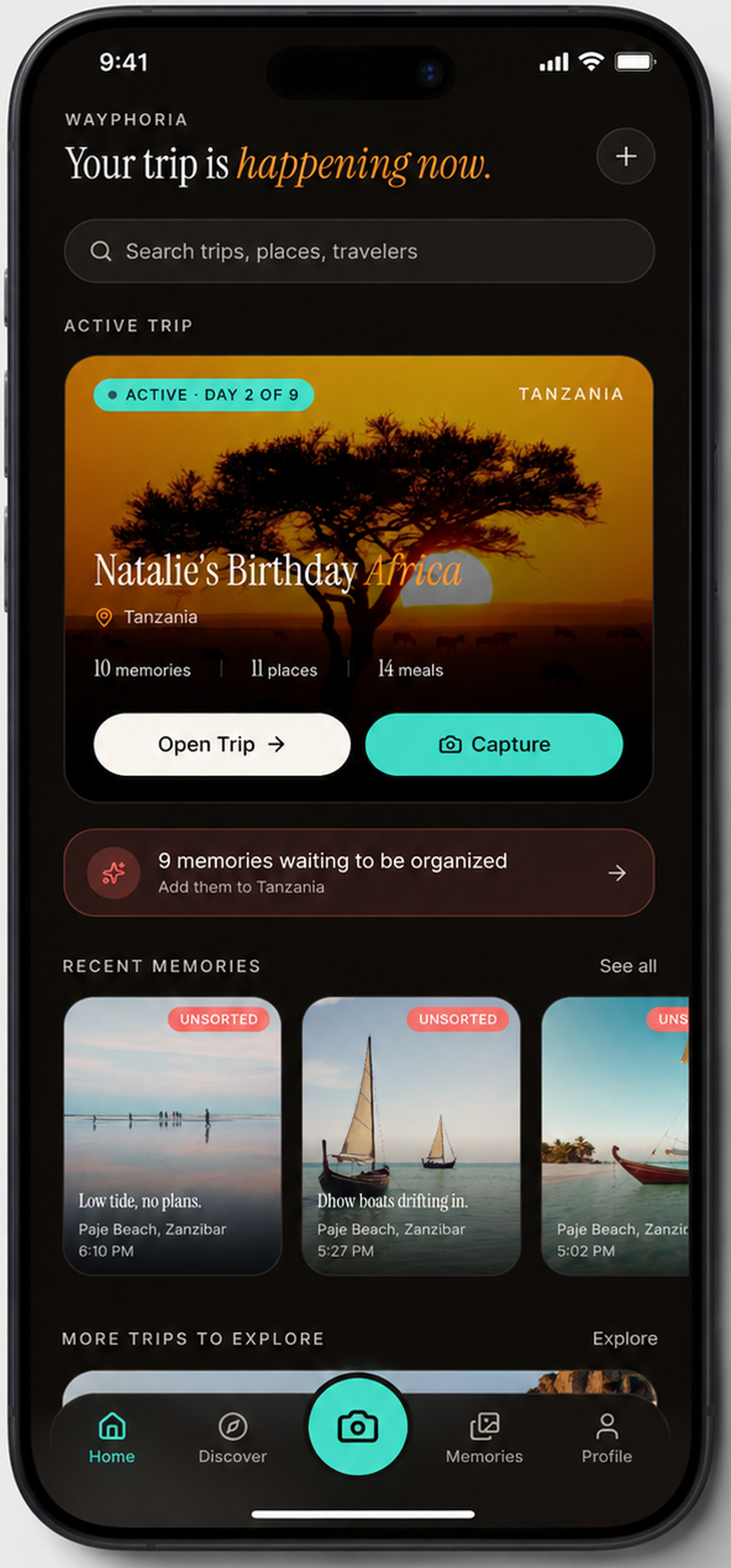
The trip becomes the live container for the experience, not just a folder of content afterward.
Organizing memories
See what has and hasn’t been assigned, filter by type, and reconnect loose moments to the trips they belong to.
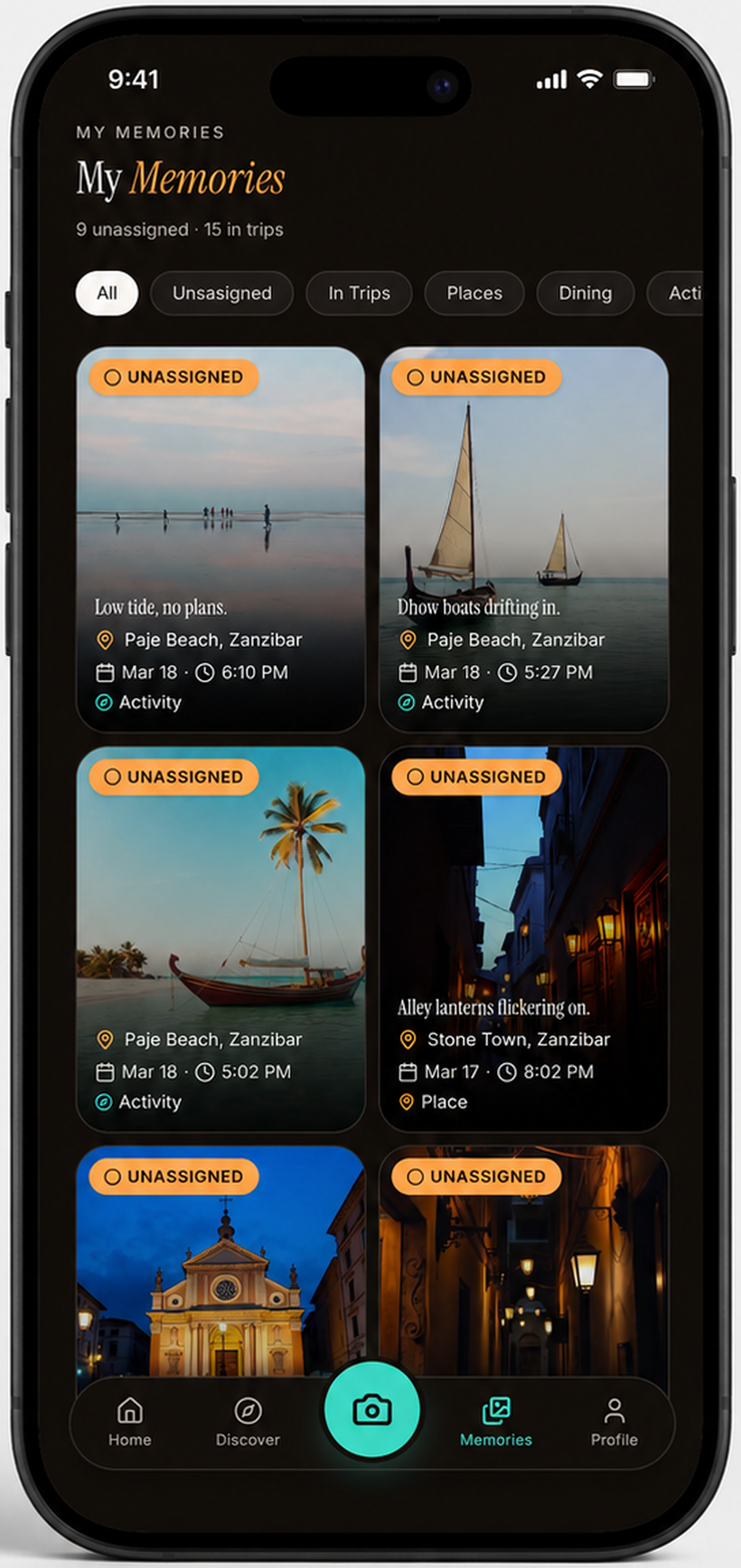
Captured moments become structured travel context, not just saved media.
Inside the trip
Bring places, experiences, decisions, memories, and timing together so the trip can be understood as a complete experience.
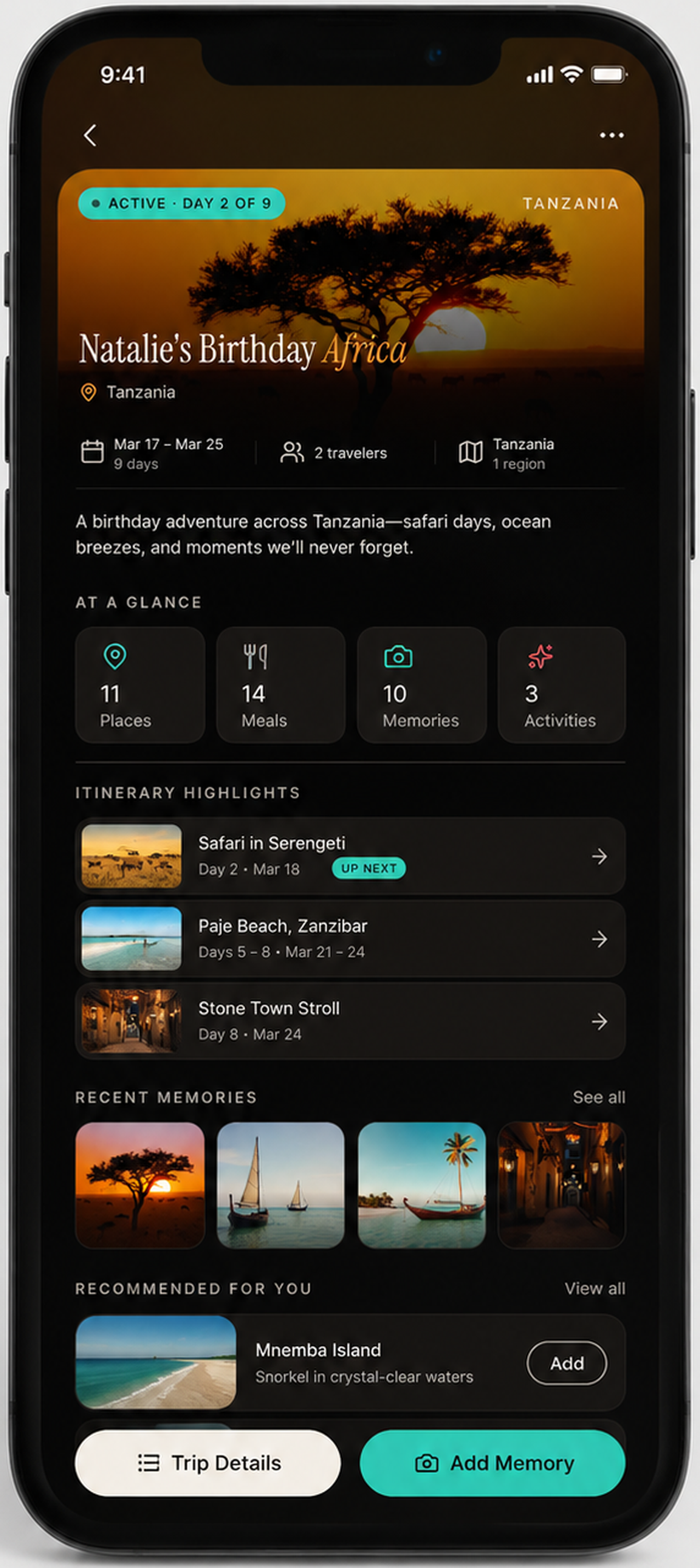
A lived trip becomes inspiration and a practical starting point for someone else.
Two sides. One trip.
For the traveler: Capture in the moment, preserve context, and keep the experience organized around the trip.
For the planner: Discover real trips, understand how they unfolded, and use them as a practical starting point for your own.
07 — DECISIONS & OUTCOME
Key decisions
The product direction came from a few clear commitments about how the system should work.
Make the trip the core product object
Everything — places, experiences, timing, decisions, and memories — attaches to a trip instead of living as loose content.
Connect lived experience with future planning
The product is only distinctive if what one traveler did can inform what another traveler plans.
Preserve context, not just content
A photo is content. A photo with place, time, sequence, and the decision behind it is useful to someone else.
Design value for both travelers and planners
The same trip has to reward the person who lived it and the person considering something similar.
Build the product loop progressively
One side of the loop had to create value on its own before the full ecosystem existed.
The result
What changed
A clearer product thesis
Wayphoria became about continuity across the travel lifecycle, not simply storing memories.
A stronger product model
The trip became the container connecting places, experiences, decisions, and memories.
A two-sided value proposition
One traveler’s lived experience could become another traveler’s planning resource.
A scalable product loop
Experience, inspiration, planning, and future experiences could reinforce one another.
Clearer MVP boundaries
The larger vision could remain intact without requiring the entire ecosystem to be built at once.
Travel doesn’t have a content problem. It has a continuity problem.
More work
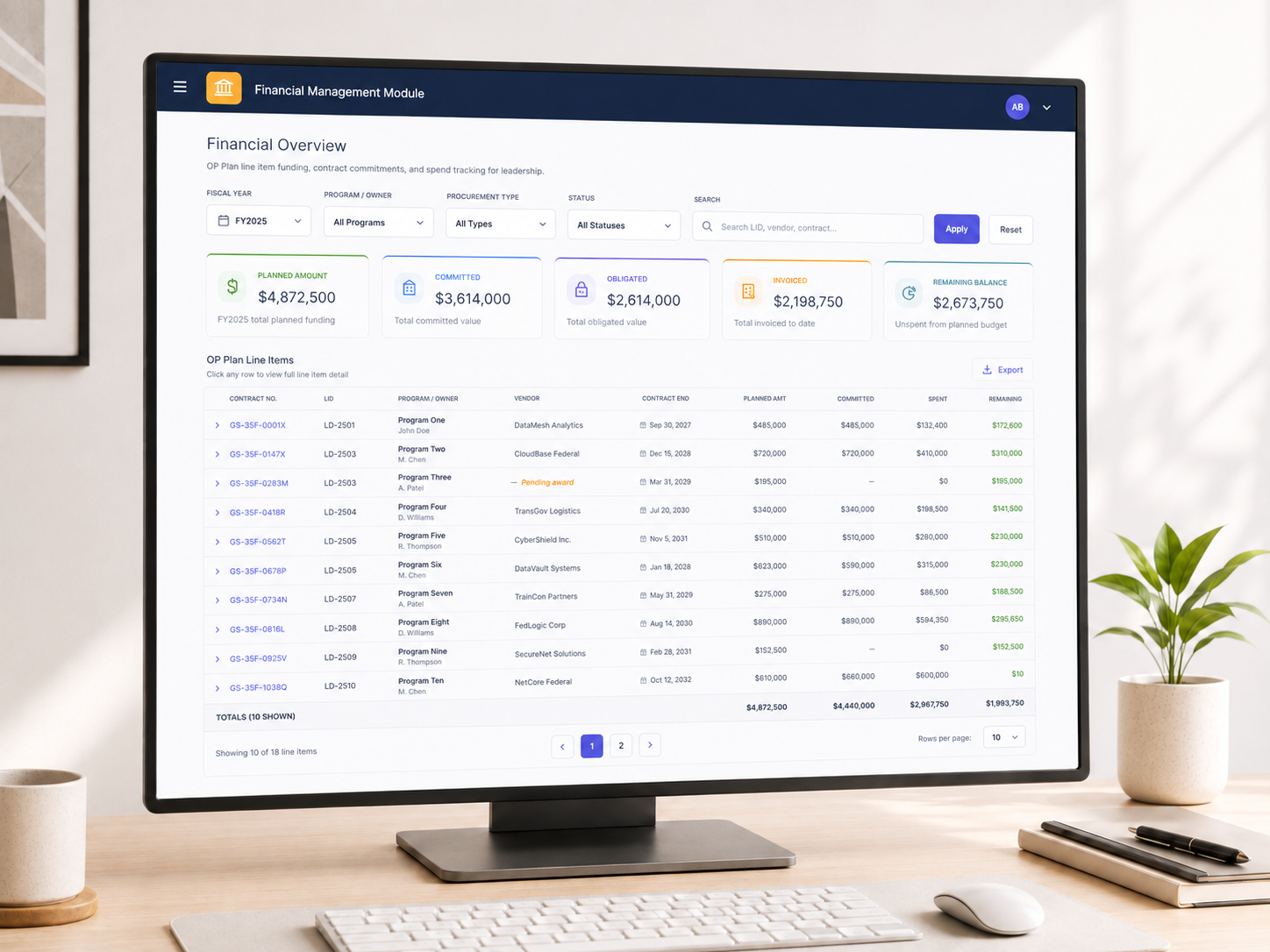
Enterprise platform · Strategy + UX/Product Design
From “build us a tracker” to a clearer operational system
From “build us a tracker” to a clearer operational system..
View case study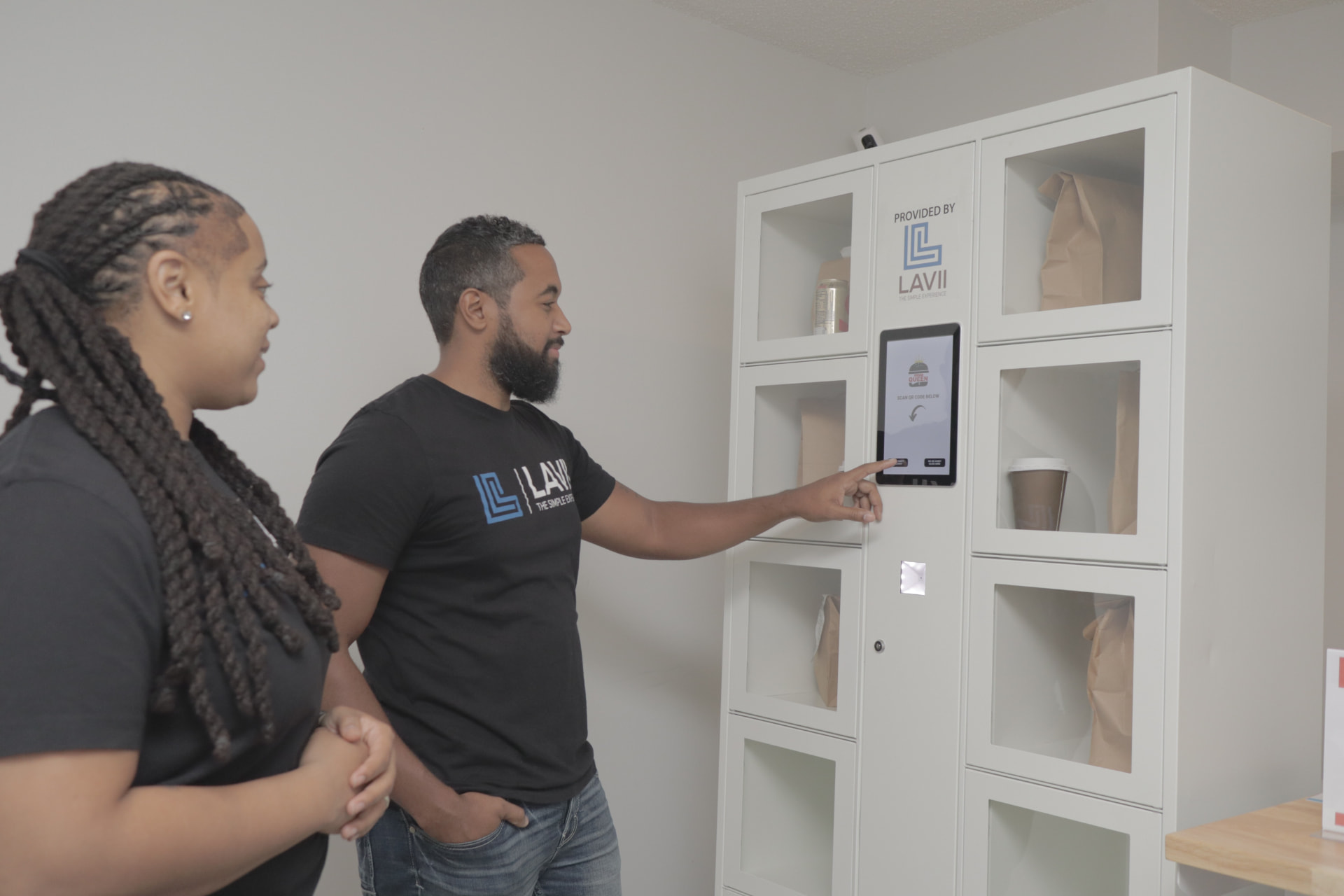
Startup · 0-to-1 Product + UX
A pickup experience that works across people, software, and hardware
Designing a faster pickup experience across the physical and digital journey..
View case study
Enterprise tool · UX/Product Design
Making a high-volume research workflow easier to navigate and trust
Making a high-volume research workflow easier to navigate and trust..
View case study