Enterprise platform · Strategy + UX/Product Design
From “build us a tracker” to a clearer operational system
A procurement team asked for a clearer tracker. The work underneath it was a much wider operational system.
- Product Strategy
- Discovery
- Complex Workflows
- Requirements
- Enterprise UX
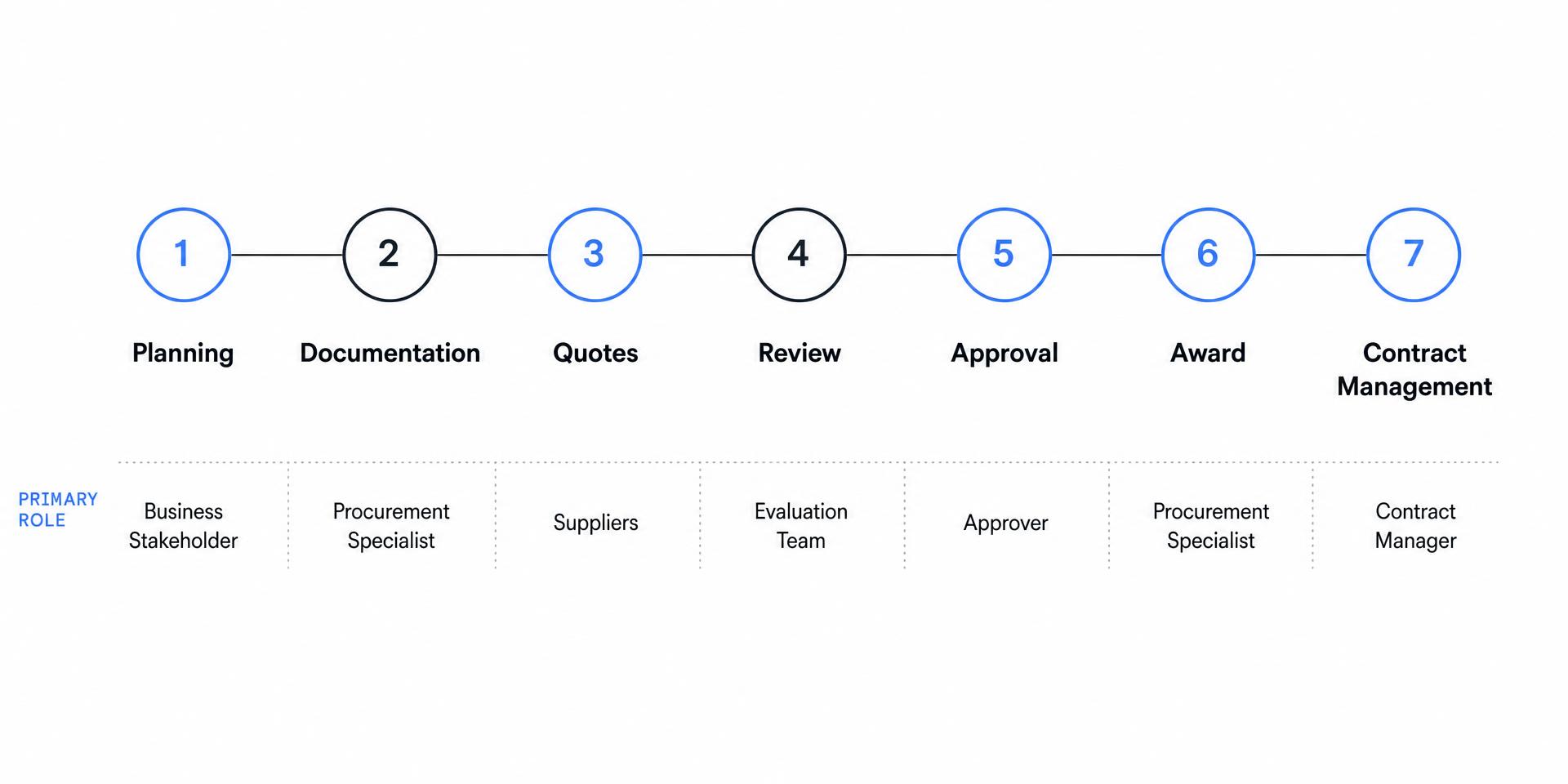 Lifecycle · stages, roles, handoffs
“Build us a tracker so we can see where things are.”
The tracker was a symptom. The system around it needed definition.
 Product direction
- My role
- Product strategy, discovery, requirements, workflow mapping, UX/product design
- Scope
- Planning, procurement, approvals, awards, and contract operations
- Context
- Enterprise platform · Strategy + UX/Product Design
01 — THE SITUATION
The ask started with visibility.
A client needed a clearer way to track procurement requests, funding, and status. On the surface, the request sounded relatively straightforward: create a better tracker for work that was already happening.
Coordination
Work was spread across multiple tools and manual processes.
Timeline
A compressed delivery window left little room for exploration.
Goal
Deliver something useful quickly without losing the bigger picture.
02 — Understanding the system
Understanding the system
Seeing the system clearly
Mapping the lifecycle made the structure visible: who owned each stage, where decisions changed hands, and how far the work extended beyond the original request.
This was bigger than a tracker.
03 — THE REFRAME
The problem wasn’t the tracker. It was the system around it.
A clearer way to track procurement, funding, and status.
The ask focused on visibility into where requests stood.
The real problem was a fragmented operational process, not just a lack of visibility.
Ownership was unclear, approvals created handoff points, and the work continued well beyond the original tracker request.
04 — PRODUCT DIRECTION
What that meant for the product
Each insight translated into a clearer product decision.
Visibility was only part of the problem.
Make ownership, status, and next steps visible.
Some stages were real gates.
Model approvals and waiting states explicitly.
The lifecycle extended beyond procurement.
Create a foundation for award and contract operations.
A flat tracker would reproduce the old process.
Structure the product around stages and decisions instead of fields.
05 — DESIGNING THE EXPERIENCE
Designing the experience
These product decisions became the structure of the experience.
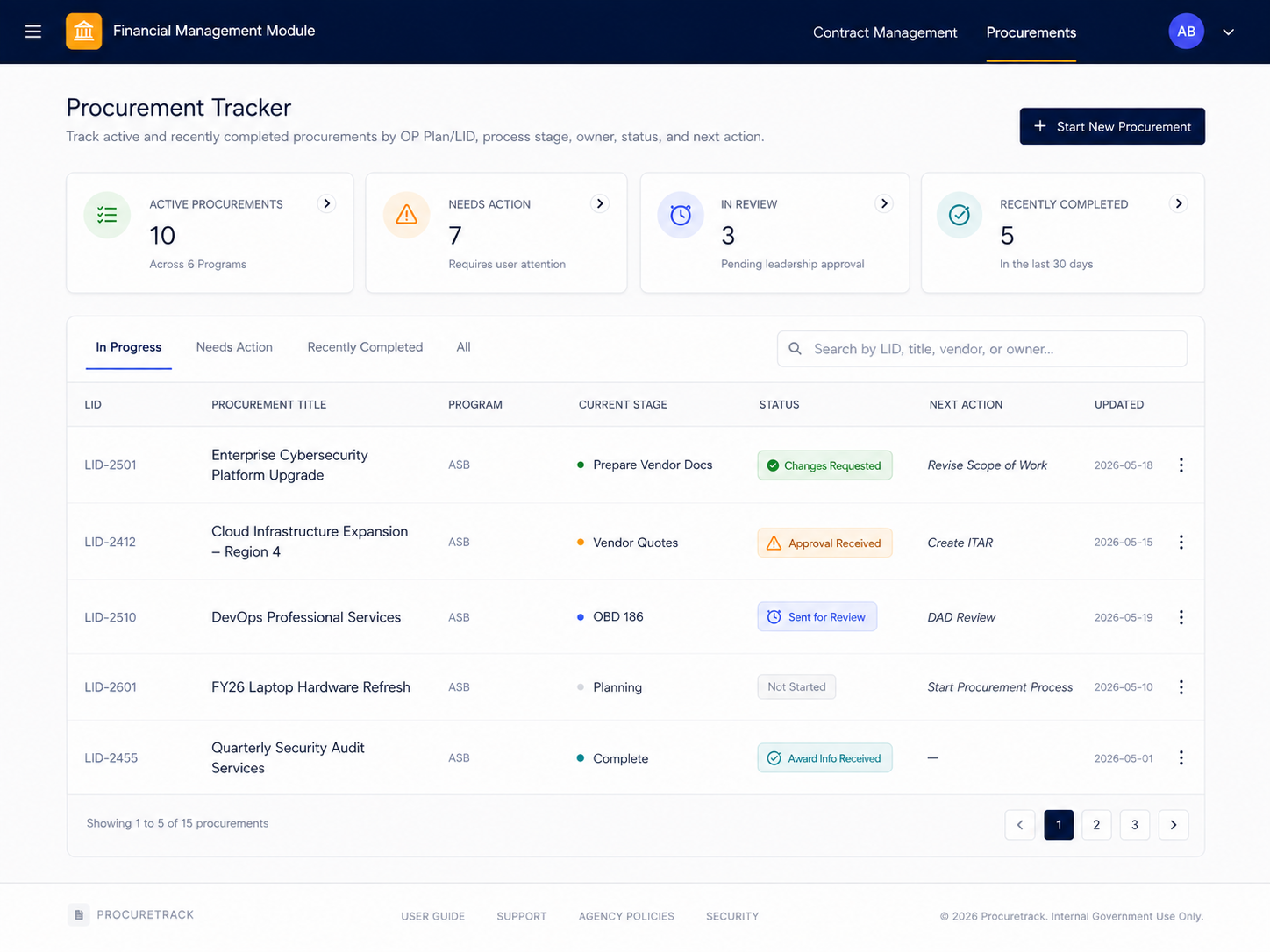
Moment 01
Starting and managing a request
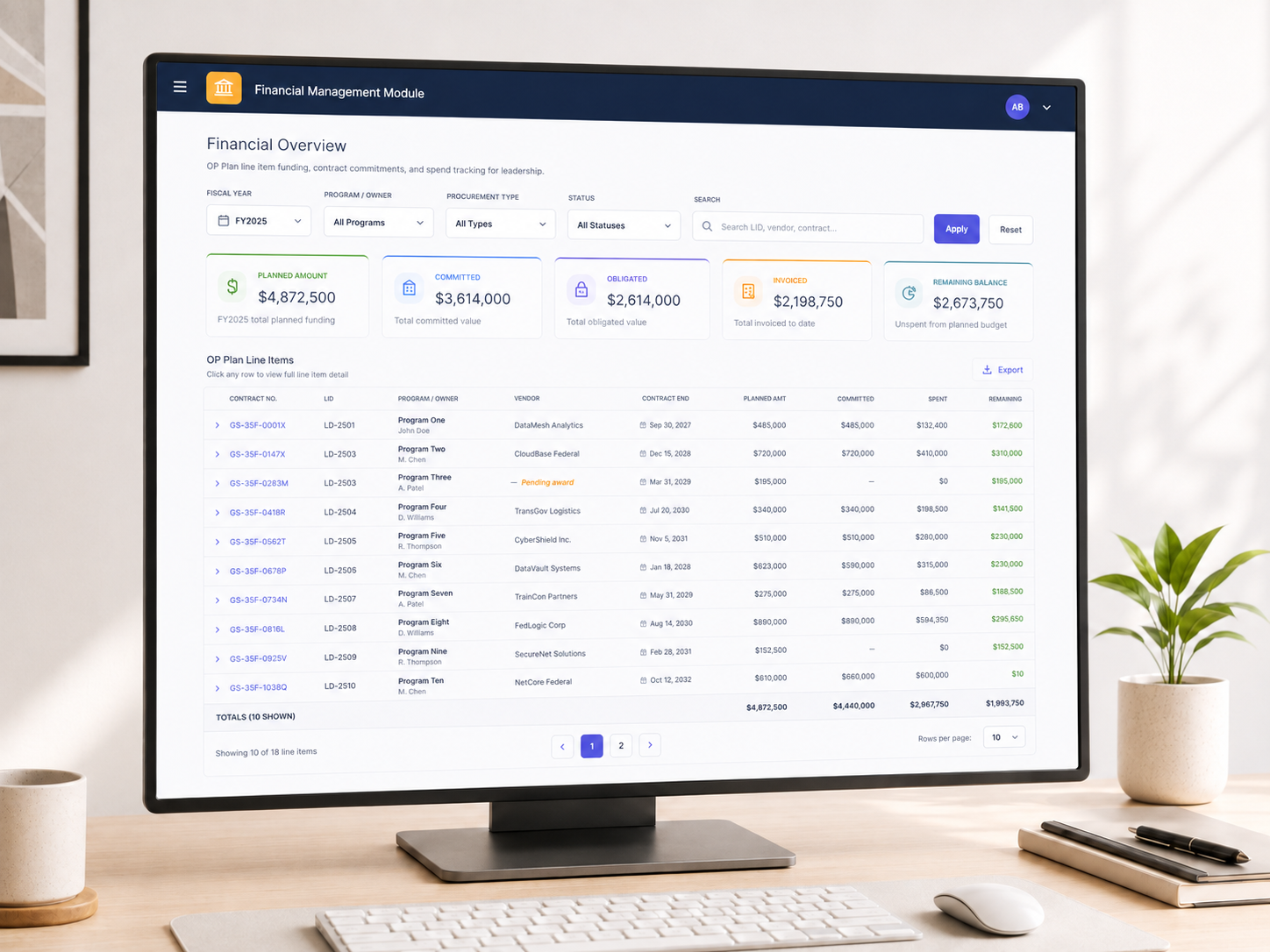
A dashboard and request list organized by stage and ownership, so people can see where every request stands, what is active, and who holds the next action.
06 — DECISIONS & OUTCOME
Key decisions
The product direction came from a few clear commitments about how the system should work.
Organize around stages, not fields
Why it mattered
A flat tracker would reproduce the spreadsheet structure without helping users understand progress.
Treat approvals as real gates
Why it mattered
Some stages depended on another role making a decision before work could continue.
Design beyond the original tracker request
Why it mattered
The work did not end when procurement was complete.
The result
What changed
A clearer shared model of the lifecycle
Stakeholders had a clearer end-to-end picture of the process.
A tighter and more intentional MVP scope
The team had a more focused definition of what needed to be built first.
Development-ready product direction
Requirements moved from feature lists toward ownership, decisions, and workflow rules.
A stronger foundation for future award and contract operations
The experience could evolve beyond the original tracker request.
The biggest shift wasn’t the interface. It was understanding the system well enough to know what the product needed to become.
More work
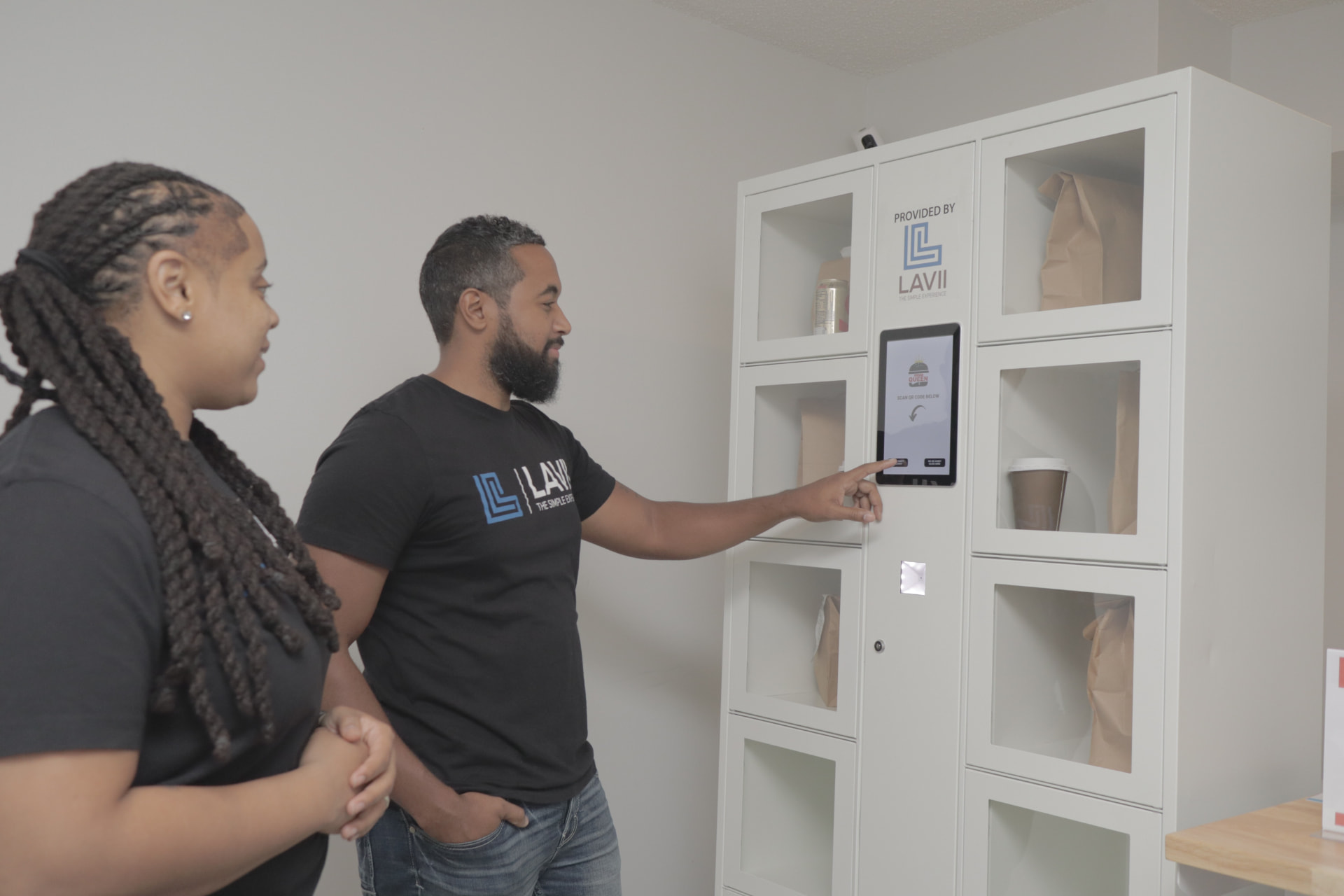
Startup · 0-to-1 Product + UX
A pickup experience that works across people, software, and hardware
Designing a faster pickup experience across the physical and digital journey..
View case study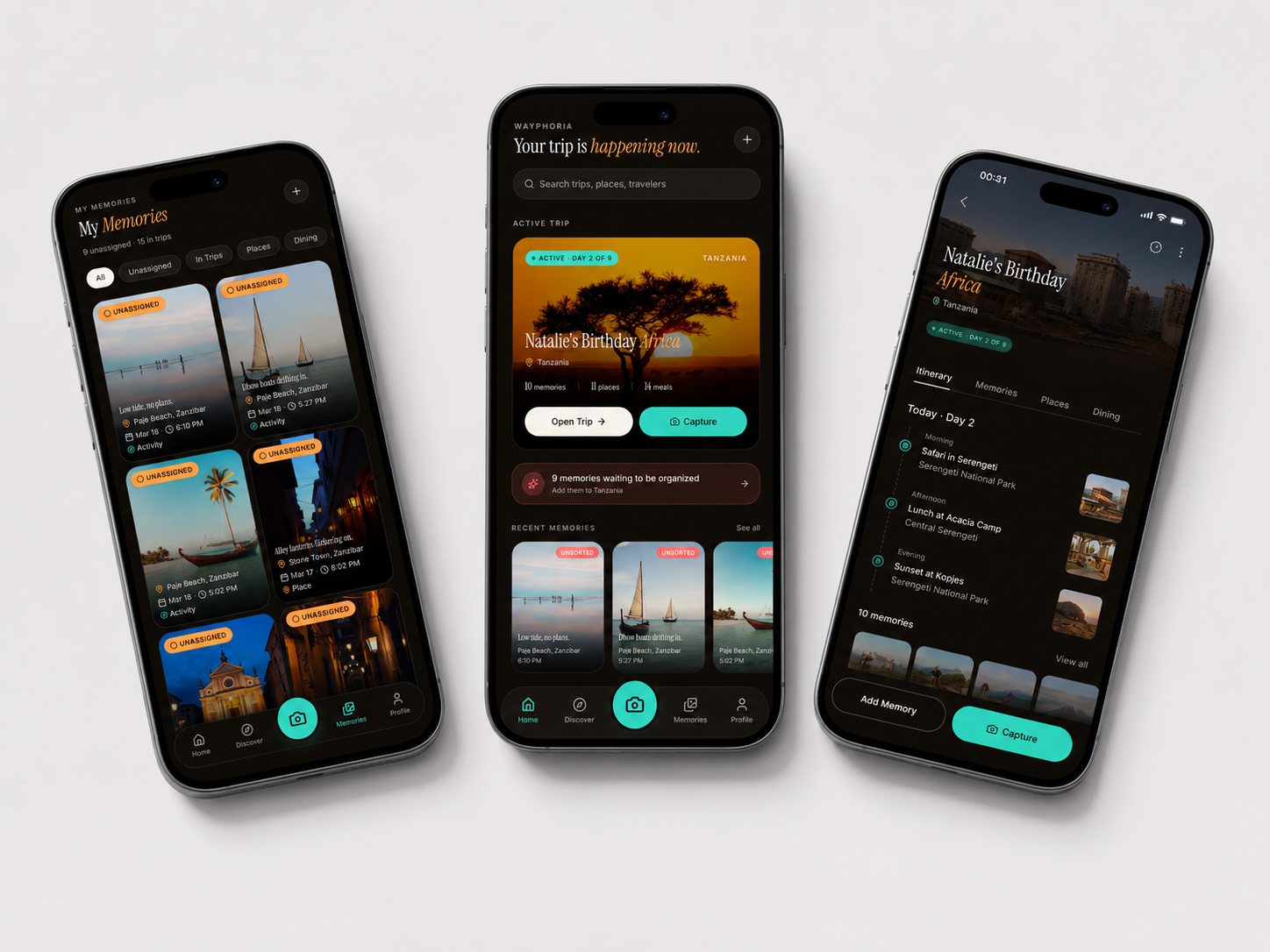
Self-initiated · Consumer Mobile Product
Where past trips become the starting point for what comes next
Wayphoria is a travel platform built around real trips, connecting the places, decisions, experiences, and memories of one traveler with the inspiration and planning needs of another..
View case study