About
Between an idea and what it could become.
I’ve always been drawn to the space between an idea and what it could become. At heart, I’m driven by curiosity, clarity, and the urge to make things better.
That has taken a lot of different forms over the years. I started by building websites and eventually full products. I moved through development, UX, product design, strategy, and increasingly into systems thinking and AI-enabled product work.
But the thread underneath all of it has stayed surprisingly consistent. I like understanding how things work, questioning what does not make sense, connecting the pieces, and finding a clearer path forward. That is still what drives the work I do today.
How I got here
From basketball and arguments to HTML and product thinking.
For a long time, I thought I would become a lawyer. And if that did not happen, I was convinced I would somehow make it to the NBA.
I loved the strategy behind an argument, the quick thinking, and the challenge of seeing something from another angle. Basketball was my first real obsession. I played through college and took that version of the future seriously.
But while I was focused on one path, another was quietly taking shape. In high school, I took a Saturday class in HTML and web design. What started as an introduction to building webpages quickly became something I could not stop thinking about.
I loved the feeling of taking an idea that only existed in my head and turning it into something real, interactive, and useful. At first, I thought I was learning how to build websites. Looking back, I was really learning how I like to work.
I was always asking why one layout made more sense than another. Why something felt confusing. What could be simpler. How the pieces could work together better. That curiosity became the foundation for everything that came next.
The work kept moving upstream
The medium changed. The instinct did not.
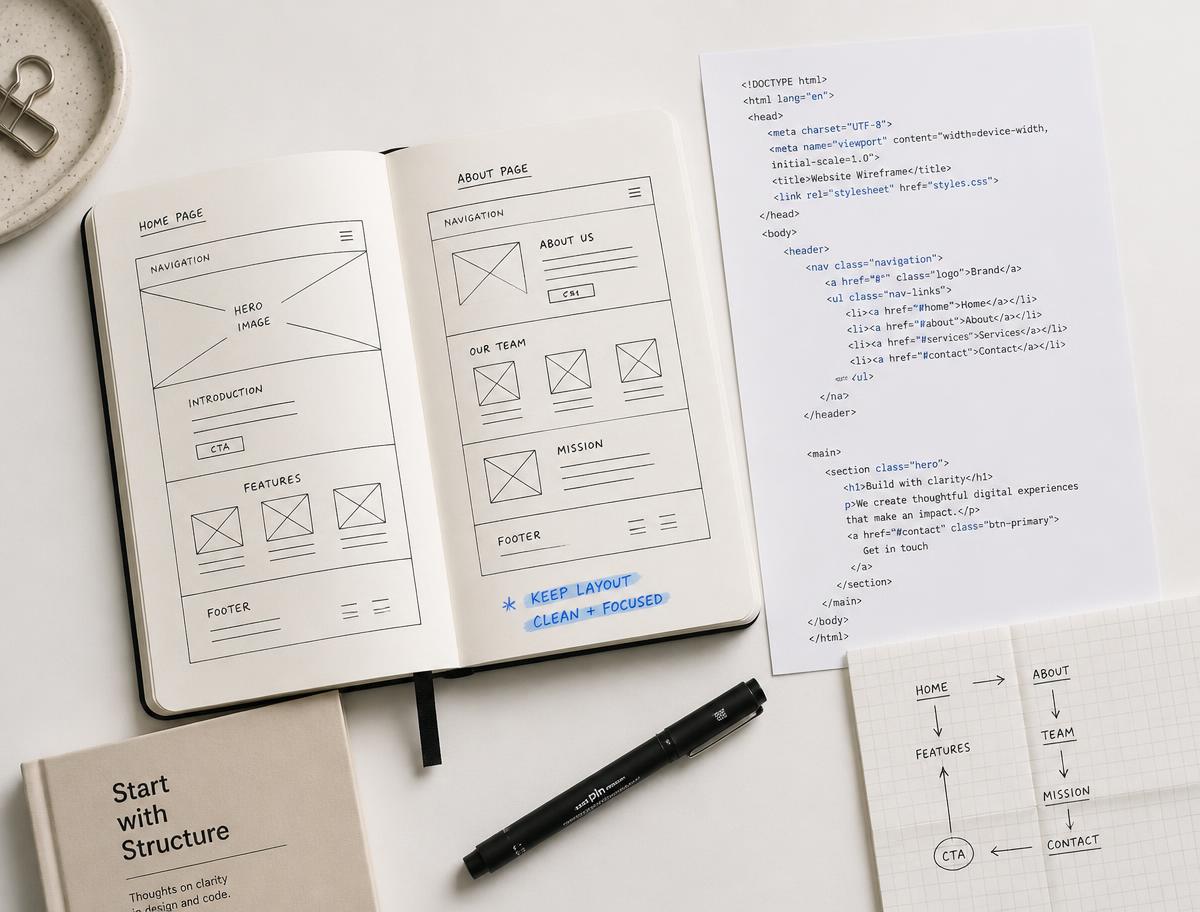
Early in my career, I worked as a full-stack developer, moving across interface design, backend development, databases, and infrastructure. That experience taught me to see products as connected systems rather than isolated screens or features.
But over time, I realized the part I cared about most was not the code itself. It was the decisions behind the product.
The questions that pulled me deeper
Why are we building this?
What problem are we actually trying to solve?
What does the user really need?
Where is the friction coming from?
What should happen first?
And what is actually worth building?
A short career arc
01
Full-stack development across interfaces, backends, databases, and infrastructure.
02
UX and product design — turning direction into something people can understand and use.
03
Product strategy and systems thinking — connecting decisions across teams and timelines.
04
AI-enabled product exploration — prototyping possibilities and accelerating clarity.
Better thinking before better building
Most product problems begin before anyone opens a design tool.
A request sounds clear, so a team moves straight to a solution. A feature gets defined before the underlying need is understood. An MVP becomes a smaller version of the entire vision. AI gets introduced because it feels like the obvious next move.
Sometimes those decisions are right. Sometimes they simply make the wrong direction more expensive.
I believe better outcomes usually start with better thinking. Understanding the situation. Questioning assumptions. Seeing how the system actually works. Finding the real source of friction. And creating enough clarity to make a good decision about what should happen next. Then the building becomes much more focused.
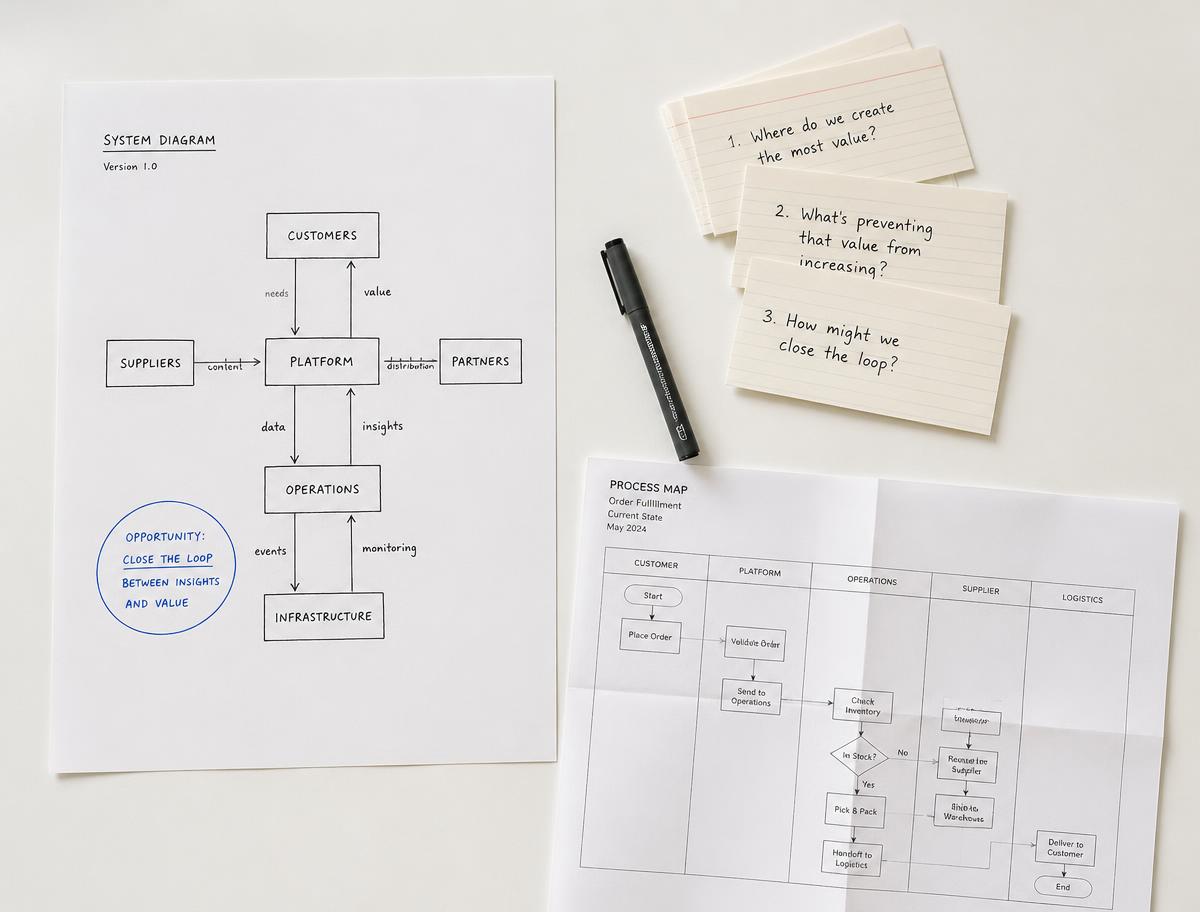
I don’t separate strategy, design, systems, and technology as much as I used to. They are different tools for solving the same kinds of problems.
- Strategy
- helps determine where to go.
- Systems thinking
- reveals how the pieces affect one another.
- UX & product design
- turn direction into something people can use.
- AI
- helps explore possibilities, prototype, and accelerate thinking.
The tool changes depending on the problem. The objective usually does not: make the situation clearer and create something that genuinely improves it.
What I’m building now
Turning the thinking into tools people can use.
Today, I’m expanding that thinking beyond individual product projects. I’m developing tools, frameworks, writing, and digital products designed to help founders, creators, builders, and teams make clearer product decisions before they commit time and resources to building.
That includes work around
The goal is not to give people more process. It is to help them see what matters. And over time, that work will continue to grow into new products, software, experiments, and ideas.
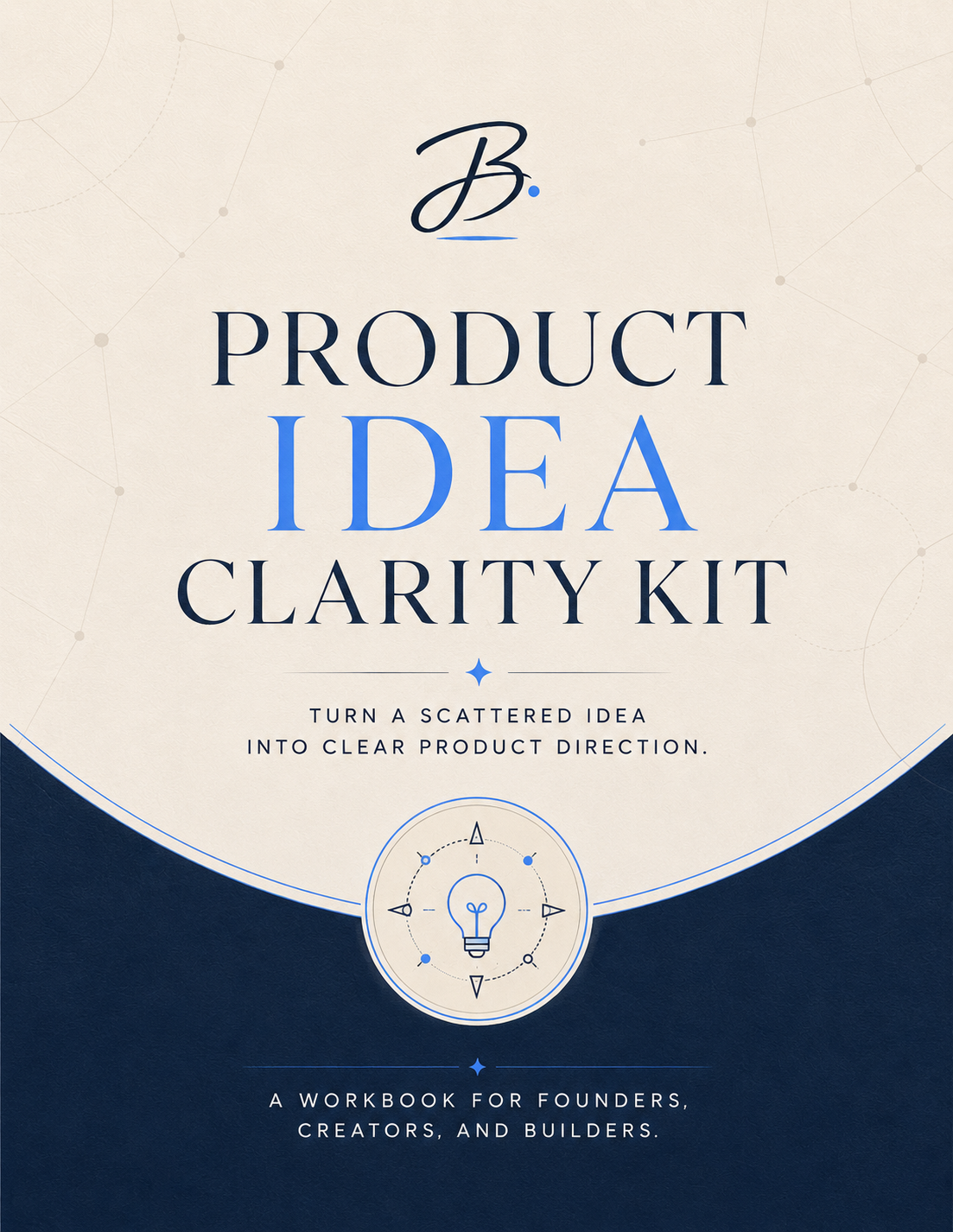
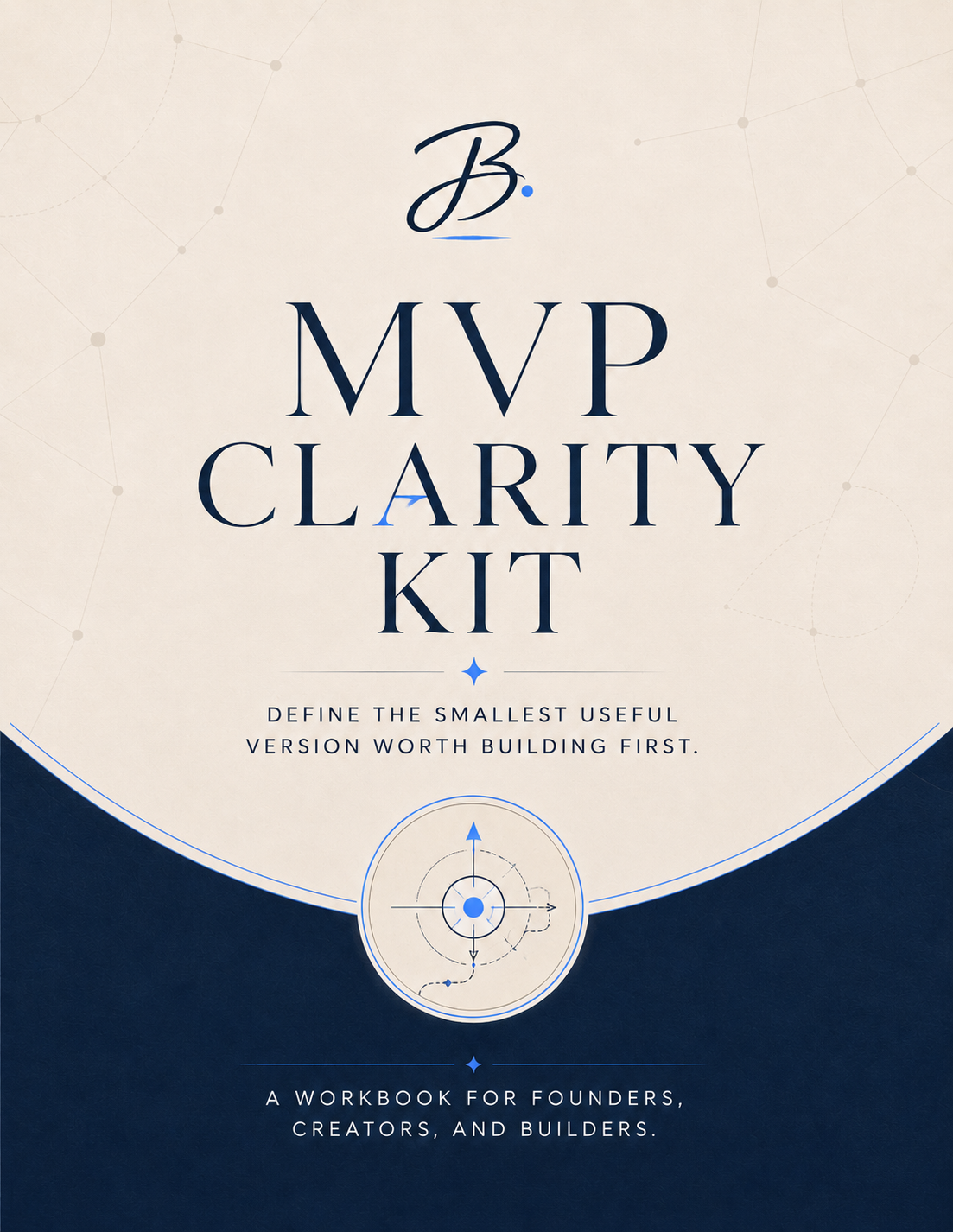
Kits and frameworks in progress.
Still creating
I do not think of my career as a finished identity.
I am still most interested in the same thing I was when I first started: taking an idea, understanding what it could become, and finding a clearer way to make it real.
Let’s talk